
PARAĆIN
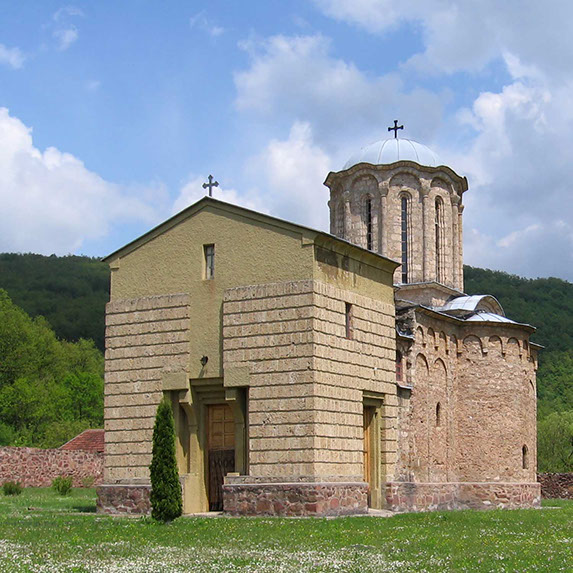
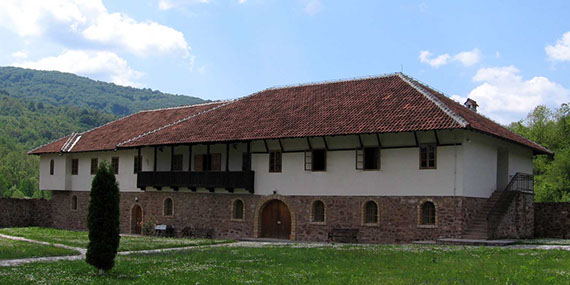
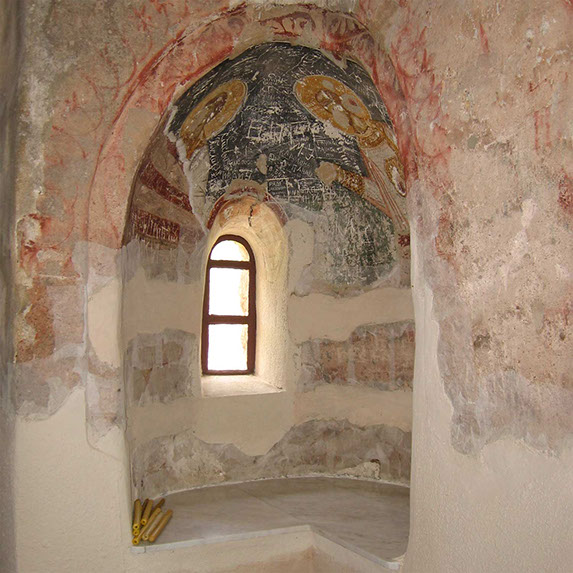
The Sisojevac Monastery in Sisevac was built in 1398 and painted a year later. In terms of its layout and architectural composition, it is a classic example of church architecture from Moravian Serbia, characterized by developed side apses and a cross-in-square plan. The narthex is approximately square, the nave elongated, and two pairs of pilasters on the northern and southern walls form a square space to support the dome. In the altar area, the corners of the side niches house the prothesis and diaconicon. The central church, along with the ‘konak’ (residence) and auxiliary buildings within the monastery courtyard, was enclosed by a tall, massive wall featuring a gate tower and defensive towers. The monastery was founded by Sisoje, a spiritual leader and abbot of Hilandar Monastery, after whom the nearby village and mine were named. The monastery is associated with the spiritual centers of the Petruška region. During Ottoman rule, it suffered destruction multiple times and was abandoned in the 17th century. Following archaeological and conservation efforts in the 1970s, the monastery complex, including the church and part of the ‘konak’, was restored.
SISOJEVAC MONASTERY
The Sisojevac Monastery was designated as a cultural heritage – cultural monument, by the Decision of the Institute for Scientific Research of Cultural Monuments in Belgrade, No. 307/51, dated March 29, 1951. It was later classified as an immovable cultural heritage of great importance by the Decision of the Assembly of the Socialist Republic of Serbia on April 7, 1979 (‘Official Gazette of the SRS’, No. 14/79).
Bibliography:
- Brmbolić, M. (2011), Mala sveta gora u klisuri reke Crnice, str. 15–22, Republički zavod za zaštitu spomenika kulture Beograd, Beograd.
- Prokić, R. (1986), Srednjovekovna arhitektura petruške oblasti, str. 81–86, Zavod za zaštitu spomenika kulture Kragujevac, Kragujevac.
- Dimitrije Madas, Arheološki radovi na utvrđenju manastira Sisojevac, Glasnik društva konzervatora Srbije 18, Beograd, 1994, str. 96–98.
- Dimitrije Madas, Manastir Sisojevac, Arheološko iskopavanje i konzervacija zidova manastirske trpezarije 1994, Glasnik društva konzervatora Srbije 19, Beograd, 1995, str. 100–103.
- S. Mileusnić, Pilog prošlosti manastira Sisojevac, Glasnik društva konzervatora Srbije 10, Beograd, 1986, str. 118–120
- D. Radulović, Dosadašnji radovi na restauraciji manastira Sisojevac, Glasnik društva konzervatora Srbije 15, Beograd, 1991, str. 61–63.
- V. Ristić, O ktitorskoj kompoziciji u Sisevcu, Petruška oblast u srednjovekovnoj Srbiji, Paraćin, 1999, str. 71–77.
- V. Ristić, O postanku crkve manastira Sisojevac i njenom ktitoru, Saopštenja XXIX, Beograd, 1997, str. 97–105.
- T. Starodubcev, Manastir Sisojevac, Beograd, 2008.
- Đ. Bošković, Sisojevac, beleške sa putovanja, Starinar III, Beograd, 1933, str. 284–285.
- Svetlana Popović, Krst u krugu, arhitektura manastira u srednjovekovnoj Srbiji, Prosveta, Republički zavod za zaštitu spomenika kulture, Beograd, 1994.
Site Map
Cultural Heritage by Type
Cultural Monuments
Notable Sites
Archaeological Sites
Spatial Cultural-Historical Units
Cultural Heritage by Location

60 years of the Cultural Heritage Preservation Institute Kragujevac
Copyright Cogent 2016. All Rights Reserved – Cultural Heritage Preservation Institute Kragujevac