
PARAĆIN
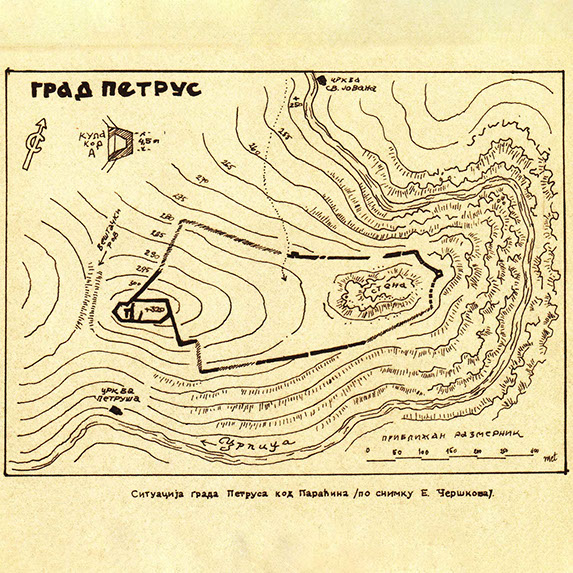
The Petrus Fortress is located on Mount Čokoća, at an altitude of 314 meters. Archaeological research of the fortification was conducted in two phases, from 1980–1981 and 2004–2005. With a base length of 297 meters, Petrus ranks among the largest hilltop fortifications in Serbia. The city walls, built from roughly cut and irregular stones with lime mortar, are 2.40 meters thick and preserved to heights ranging from 1.5 to 7 meters. The interior of the fortress is organized into two parts: the citadel and the large town. The citadel, located on the western plateau, measures 62m x 36m. Numerous fragments of ceramics, stone sculptures, and frescoes were discovered within it.
Based on the construction techniques and discovered artifacts, four chronological phases of the fortification have been identified. The most recent phase includes walls built in an irregular technique, dated to the 14th–15th centuries, which rest on walls constructed in a regular technique with leveling courses of bricks between every second row of stones, dated to the 12th century. At a lower elevation, a wall built in dry stone technique from the 6th century was discovered, which is founded on a cultural layer from the Early Iron Age.
MEDIEVAL TOWN OF ‘PETRUS’
Bibliography:
- Marin Brmbolić, Mala Sveta gora u klisuri reke Crnice, Republički zavod za zaštitu spomenika kulture, Beograd 2011.
- Radoslav Prokić, Srednjovekovna arhitektura petruške oblasti, Zavod za zaštitu spomenika kulture Kragujevac, Kragujevac 1986.
- Marin Brmbolić, Ranovizantijska nalazišta u Srednjem pomoravlju, Spomenica Jovanu Kovačeviću, Beograd, 2003, 281-291
- D. Madas, Traial researches at the medieval town of Petrus, Balcanoslavica 8, Beograd 1979.
- D. Madas, M. Brmbolić, Petrus, srednjovekovno utvrđenje, Arheološki pregled 23, Beograd 1982, 144-146
- B. Knežević, Srednjovekovne crke u dolini Crnice, Zornik za likovne umetnosti Matice srpske 16, Novi sad 1980, 223-262
- Svetlana Popović, Krst u krugu, arhitektura manastira u srednjovekovnoj Srbiji, Prosveta, Republički zavod za zaštitu spomenika kulture, Beograd, 1994.
- Feliks Kanic, Srbija, zemlja i stanovništvo, od rimskog doba do kraja XIX veka, druga kiga , LOGOS ART, Beograd, 2007
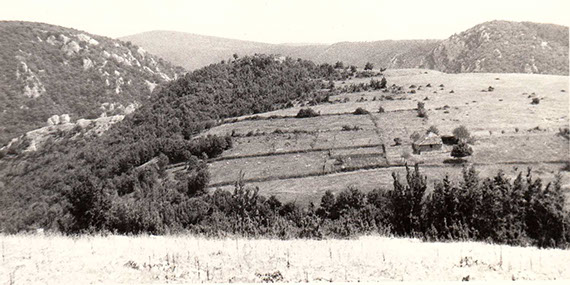
The Medieval Town of ‘Petrus’ was designated as cultural monument – archaeological site, by the Decision of the Municipal Assembly of Paraćin, No. 011-5/85-01, dated March 14. 1985, and as an immovable cultural heritage of great importance by the Decision of the Assembly of the Socialist Republic of Serbia on July 21, 1983 (‘Official Gazette of the SRS’ No. 28/83).
Site Map
Cultural Heritage by Type
Cultural Monuments
Notable Sites
Archaeological Sites
Spatial Cultural-Historical Units
Cultural Heritage by Location

60 years of the Cultural Heritage Preservation Institute Kragujevac
Copyright Cogent 2016. All Rights Reserved – Cultural Heritage Preservation Institute Kragujevac