
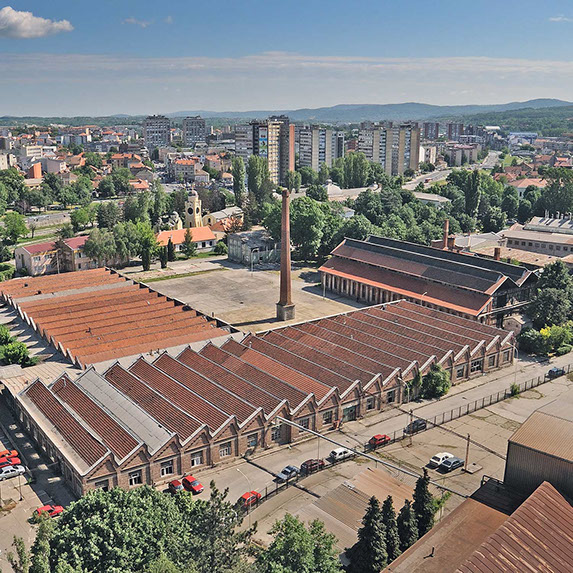
MILITARY-TECHNICAL INSTITUTE
established with the construction of the Gunpowder Factory in Kragujevac, by the Decision of the Government of the Principality of Serbia in 1850. Construction began in 1851 and was completed in 1853, when the first cannons were cast. At the initiative of Prince Alexander, with the consent of Emperor Napoleon III, Charles Lubri was appointed as the first director, who had been the supervisor of a private foundry in Dieppe. Thanks to Lubri's significant efforts, the First Craft School was founded to systematically train personnel for the new military factory, as well as the Workers' Medical Fund – the precursor to pension insurance institutions in Serbia. In 1892, a railway line was put into operation for more efficient supply. As a result, the factory in Kragujevac became the most significant place for weapon production and, thanks to the renowned engineer and professor Todor Toša Selesković, the site where the first electric power plant in Serbia was created and launched. After World War I, pioneering production and repair of automobiles began, which later grew into the largest factory in the region.
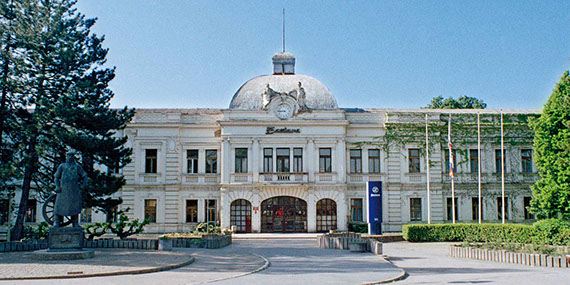
Within the spatial cultural-historical unit of the Military-Technical Institute, the following buildings are located: the Old Gunpowder Factory (now the ‘Old Foundry’ museum), the Large Chimney, the Old Cartridge Factory, the Machine/Mechanical Workshop, the Administrative Building, the Director's Residence, the Serbian Royal Military Craft School (now the Second Technical School), the Dormitory of the Military Craft School (now the Polytechnic School), the Artillery Workshop, the Old Energy Plant, the Children's Kindergarten, the Old Clinic, the Artillery Non-Commissioned Officer School, Officers' Residences, the Flag Security, the Ammunition and Gunsmith Workshop, the Carriage Workshop, the Press Room, the R.A.P. Production Hall, the Kayin Warehouse, the Old Tannery, the Stables, the Cartridge Factory, the Fire Tower, the Ambulance Building, the Administrative Building of Pyrotechnics, and a number of other buildings.
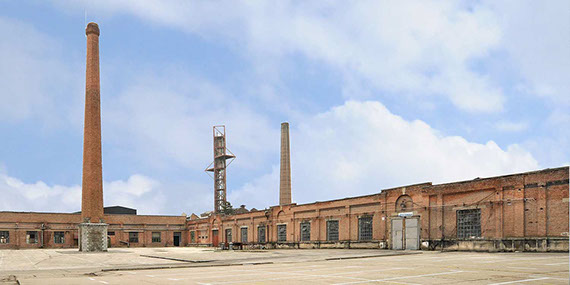
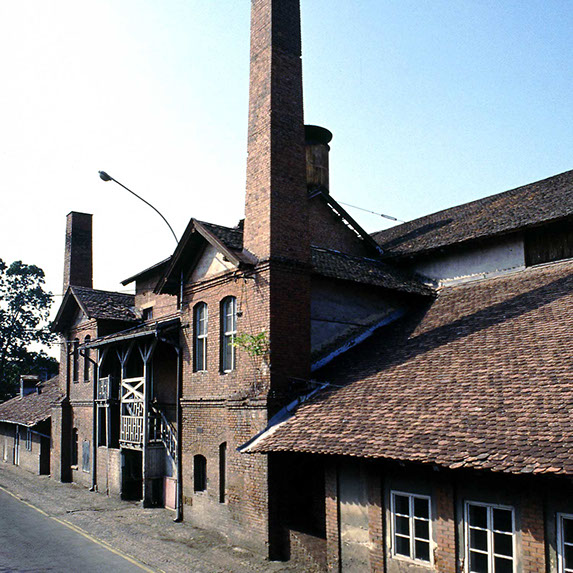
The Gunpowder Factory building is the oldest structure within the Military-Technical Institute complex, built in 1882. The building was designed by Todor Selesković. In 1968, after being relocated, it became a museum. The building is symmetrical, rectangular in its base, with flat front facades and a protruding central risalit on the eastern, main facade. The facades are a successful composition of brickwork, between wooden beams and plastered surfaces. The interior is defined by the form of a hall with a higher central nave and two lower side aisles.
In the immediate vicinity, there is also the chimney of the old boiler house, which is physically connected to the Foundry building by an underground passage. It was built from brick on a high base made of roughly hewn hexagonal stone, gradually narrowing as it rises towards the top. On the stone slab of the base, there is an engraved text with the construction year of both buildings: ‘Built under the rule of King Milan in 188(2-9).’
The Military-Technical Institute was designated as a cultural heritage – spatial cultural-historical unit by the Decision of the Government of the Republic of Serbia, No. 633-2365/2014, dated March 25, 2014 (Official Gazette of the RS, No. 36/2014, dated March 24, 2014). It was categorized as a cultural heritage of exceptional importance by the Decision of the National Assembly of the Republic of Serbia, No. 2, Official Gazette of the RS, No. 12, dated February 12, 2016.
The Foundry building with the large chimney was designated as an immovable cultural heritage – cultural monument, by the Decision of the Institute for the Protection and Scientific Study of Cultural Monuments of the People's Republic of Serbia, No. 309/53, dated April 29, 1953. It was categorized as a cultural monument of great importance on April 7, 1979 (‘Official Gazette of the People's Republic of Serbia,’ No. 14/79), and as part of the Military-Technical Institute, it was categorized as a spatial cultural-historical unit of exceptional importance by the Decision of the National Assembly of the Republic of Serbia, No. 2, Official Gazette of the RS, No. 12, dated February 12, 2016.
Site Map
Cultural Heritage by Type
Cultural Monuments
Notable Sites
Archaeological Sites
Spatial Cultural-Historical Units
Cultural Heritage by Location

60 years of the Cultural Heritage Preservation Institute Kragujevac
Copyright Cogent 2016. All Rights Reserved – Cultural Heritage Preservation Institute Kragujevac