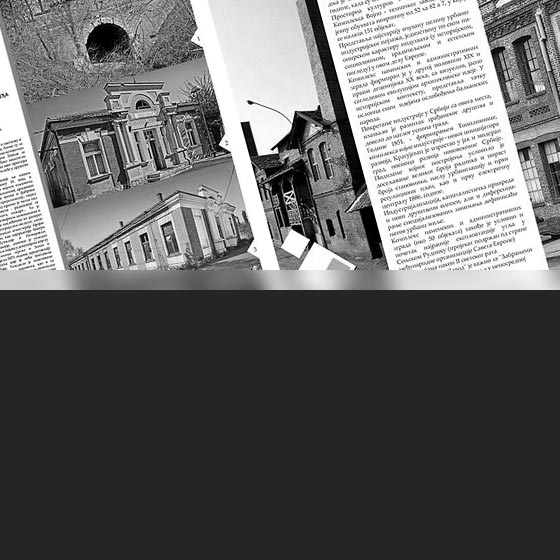
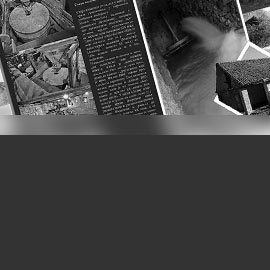
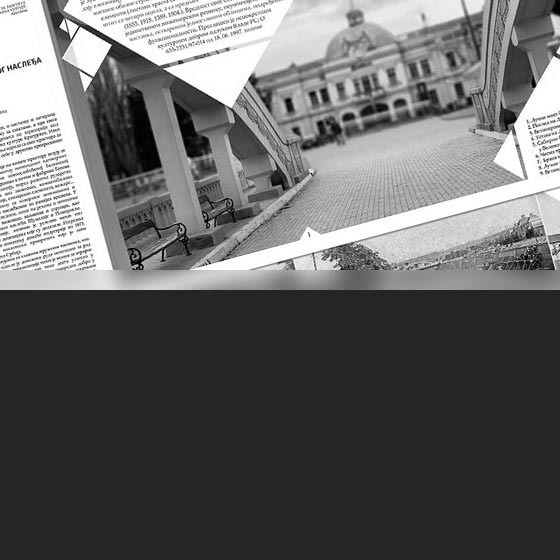
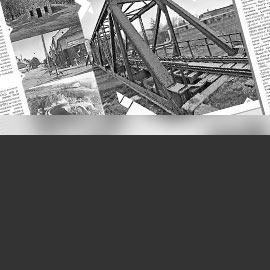
49 years of work
2015, European Year
of Industrial and Technical Heritage of Šumadija and Pomoravlje
November, 2015
Cultural Heritage Preservation Institute Kragujevac
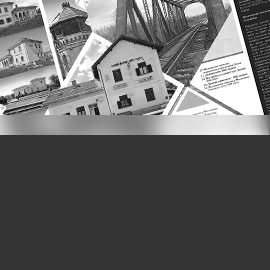
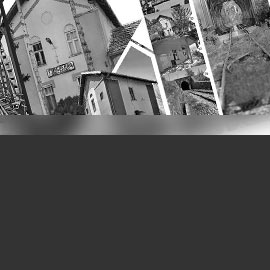
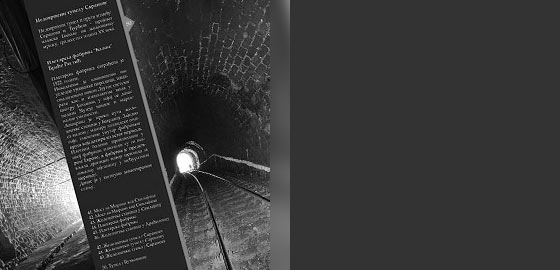
Exhibition Panels ‘49 years of work’
2015, European Year of Industrial and Technical Heritage of Šumadija and Pomoravlje
Numerous theories, developed within professional circles, about the origin and dating of the industrial revolution and design, are important for understanding, and primarily for the comparative evaluation of identical processes in the territory under the jurisdiction of the Cultural Heritage Preservation Institute Kragujevac. Although delayed, the activities and aspirations of the people from this area to catch up with civilization and place themselves among the progressive nations are indisputable.
Material traces of industrialization in our region are linked to the first half of the 19th century and the permanent necessity to respond to military challenges imposed on the newly liberated Balkan state (Powder Mill in Stragari, Arsenal and later the Cannon Factory in Kragujevac…). Military industrialization, alongside the development of mining (Senjski Mine), was accompanied by a whole range of compatible craft activities – workshops for making cloth, carpentry elements, tanneries… This represented a certain connection with the original occupations and technical culture of this people inherited from earlier times. In this context, as material witnesses, numerous watermills, rolling mills, and lathes still exist along rivers and streams today, as the most valuable pearls of the milling heritage of Šumadija and Pomoravlje.
With the acceleration of industrialization, a whole series of successful projects and phenomena logically followed in the decades that followed. The construction of the railway network and the 1873 Law on Supporting Domestic Industry are clear indicators of the priorities set by the Kingdom of Serbia at the time. This was followed by the connection of Kragujevac with major railway routes, as well as with Senj Mines, from where ore was brought for the operation of the Foundry. The further evolution of industrialization is closely related to the agrarian potentials of this region, so significant investments were made in the modernization of production, training of personnel (Agricultural Estate in Dobričevo), and, above all, in raw material processing (steam mills, textile industry…). As pioneers of electrification, the oldest traces of material heritage once again appear here (the building of the old energy plant of VTZ), recorded in both urban and rural cultural-natural landscapes.
This trend continued in the institute's practice during the 1990s when the importance of milling heritage was increasingly recognized (almost parallel to similar trends in the world), which we are rich in, and which has multiple values such as industrial-technological, sociological (the story of life and daily life of a community), ethnological… After 2000, the Kragujevac Institute expanded its studies to include successful and less successful examples of the repurposing of industrial and technical heritage spaces and entities, in terms of sustainability. This activity was inevitably accompanied by strong media engagement aimed at presenting and educating the community, as well as presenting practical potentials.
However, in the everyday approach to industrial heritage and its acceptance, we are still far behind other, more mature communities, for which factory chimneys have long since become acceptable elements of the visual perception of cities and villages. All the energy invested by the hardworking and progressive people of Šumadija and Pomoravlje, who built, introduced innovations, and had a vision in the past, still stands trapped in numerous material testimonies, which are still waiting to be researched and preserved for future generations.
Site Map
Cultural Heritage by Type
Cultural Monuments
Notable Sites
Archaeological Sites
Spatial Cultural-Historical Units
Cultural Heritage by Locations

60 years of the Cultural Heritage Preservation Institute Kragujevac
Copyright © Cogent 2016. All Rights Reserved – Cultural Heritage Preservation Institute Kragujevac