
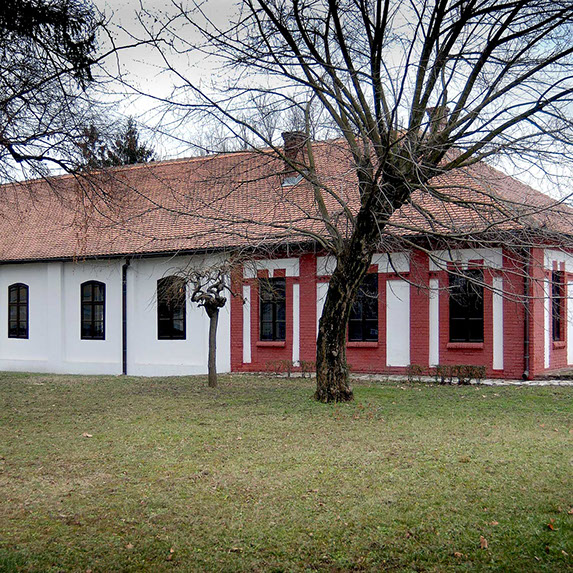
The Old Assembly Building in Kragujevac is located within the courtyard of the Old Church, forming an essential and inseparable part of this historically significant and unique site. During the reign of Prince Miloš (Serbian Knez Miloš), prior to the construction of the assembly building, this part of the churchyard served as a venue for speeches and gatherings of prominent figures.
The first regular assembly at this location was held in 1824. Later, a wooden building was erected to accommodate assembly meetings, and in 1859, a structure resembling the present-day building was constructed. It was here in 1878 that the decisions of the Berlin Congress, granting Serbia its independence, were publicly read.
Architecturally, the building is very simply designed, devoid of any significant ornaments or decorations. Its rectangular layout features two rows of columns that divide the interior space. The walls were adorned with flags and coats of arms, while the western section housed a tribune. The building was constructed following the principles of modern European architecture, using brick and mortar, with additional rooms later added to the western section. It is topped with a gabled roof covered in traditional ‘biber’ tiles. Given its period and method of construction, the building is considered one of the earliest in Serbia to be built in the spirit of European architecture.
OLD ASSEMBLY BUILDING IN KRAGUJEVAC
The Old Assembly, together with the Old Church in Kragujevac, was declared a cultural heritage – cultural monument, by the Resolution of the Institute for the Scientific Study of Cultural Monuments in Belgrade, No. 1410, dated September 26, 1958. It was categorized as a cultural heritage of great importance for the Republic of Serbia on April 7, 1979, in the Official Gazette of the Republic of Serbia, No. 14/79.
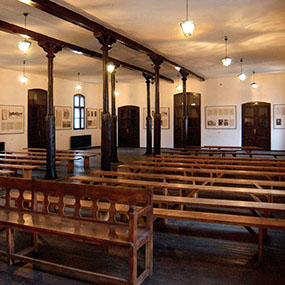
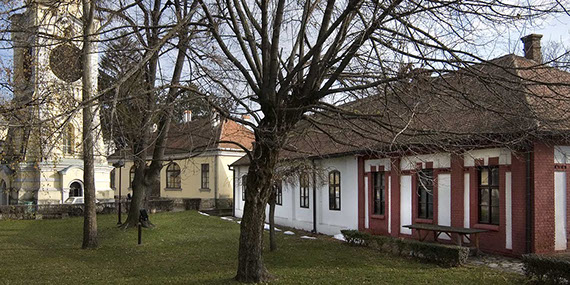
In 1880, the building's purpose was changed, its appearance significantly altered, and it was repurposed for the Military-Technical Institute. After that, it housed the depot of the National Museum of Kragujevac, and in recent years, it has been used for representative purposes.
Site Map
Cultural Heritage by Type
Cultural Monuments
Notable Sites
Archaeological Sites
Spatial Cultural-Historical Units
Cultural Heritage by Location

60 years of the Cultural Heritage Preservation Institute Kragujevac
Copyright Cogent 2016. All Rights Reserved – Cultural Heritage Preservation Institute Kragujevac